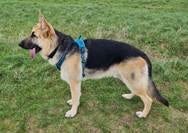
Ventricular arrhythmias are a significant concern in veterinary cardiology, particularly in certain breeds with a known genetic predisposition.
One such condition, inherited ventricular arrhythmia, has been documented in German Shepherds and follows a distinct progression, often unnoticed due to the lack of associated clinical signs or structural heart disease on echocardiography.
Recently, a young German Shepherd called Finn was initially referred to Bristol Vet Specialist’s Neurology team for an abnormal hindlimb gait. However, during general anaesthesia, a polymorphic ventricular arrhythmia was detected, leading to an immediate referral to the Cardiology team.
This arrhythmia is a well-recognised inherited condition in the breed, typically manifesting around 12 weeks of age, worsening between 24 and 30 weeks, and significantly reducing in frequency by 24 months.
While many affected dogs eventually exhibit minimal or no ectopies, sudden cardiac death remains a risk, especially between 4 and 12 months of age. Notably, these patients are most vulnerable during periods of lower heart rates, which makes the condition particularly insidious.
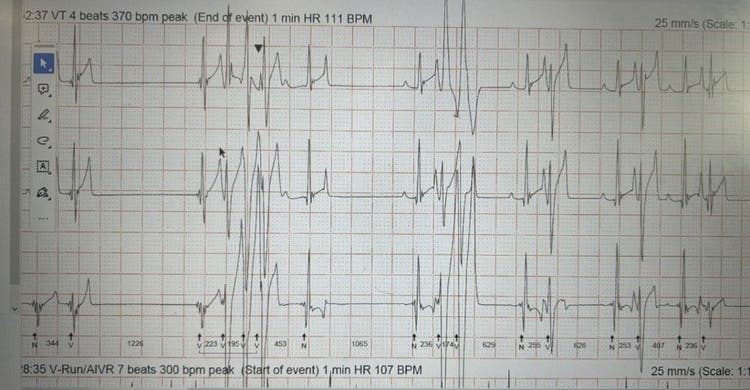
Finn’s ventric beats
Given the absence of overt clinical signs and the potential for this arrhythmia to remain undetected, a Holter monitor (24-hour ECG) was utilised to confirm Finn’s condition. Upon diagnosis, Finn was promptly started on a combination of Sotalol and Mexiletine, both antiarrhythmic medications aimed at reducing the frequency and severity of the arrhythmia.
Two weeks after initiating treatment, Finn returned to BVS and underwent a follow-up Holter assessment. The results were promising, demonstrating a 50% reduction in the frequency of the arrhythmia, a notable decrease in its complexity, and, importantly, no recorded episodes of ventricular tachycardia.
Vets should remain vigilant for this condition in German Shepherds, particularly when patients undergo anaesthesia or exhibit unexplained syncopal events. Holter monitoring is a valuable diagnostic tool that can help identify affected individuals and guide appropriate treatment strategies to reduce the risk of sudden cardiac events.
Bristol Vet Specialists is one of the largest and most advanced animal hospitals in the UK. The 30,000 sq. ft. multidisciplinary hospital has been custom-built with cutting-edge facilities and equipment. It employs some of the most qualified and experienced veterinary professionals in the world and employs a multi-disciplinary approach, with an entire team around every patient to ensure the best outcome. The site has been designed to facilitate the development of new and emerging treatments and offers the latest technology and treatments in all small animal disciplines including; general surgery, orthopaedics, neurology and neurosurgery, internal medicine, ophthalmology, cardiology, dermatology, oncology and dentistry, as well as dedicated anaesthesia, analgesia, diagnostic imaging and intensive care departments.