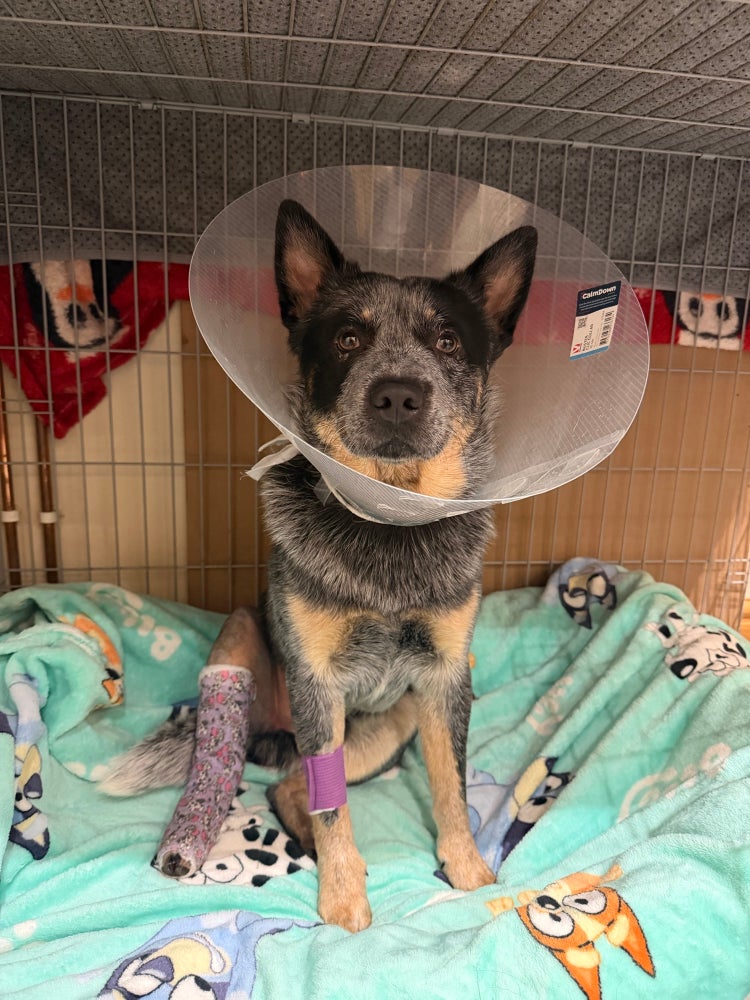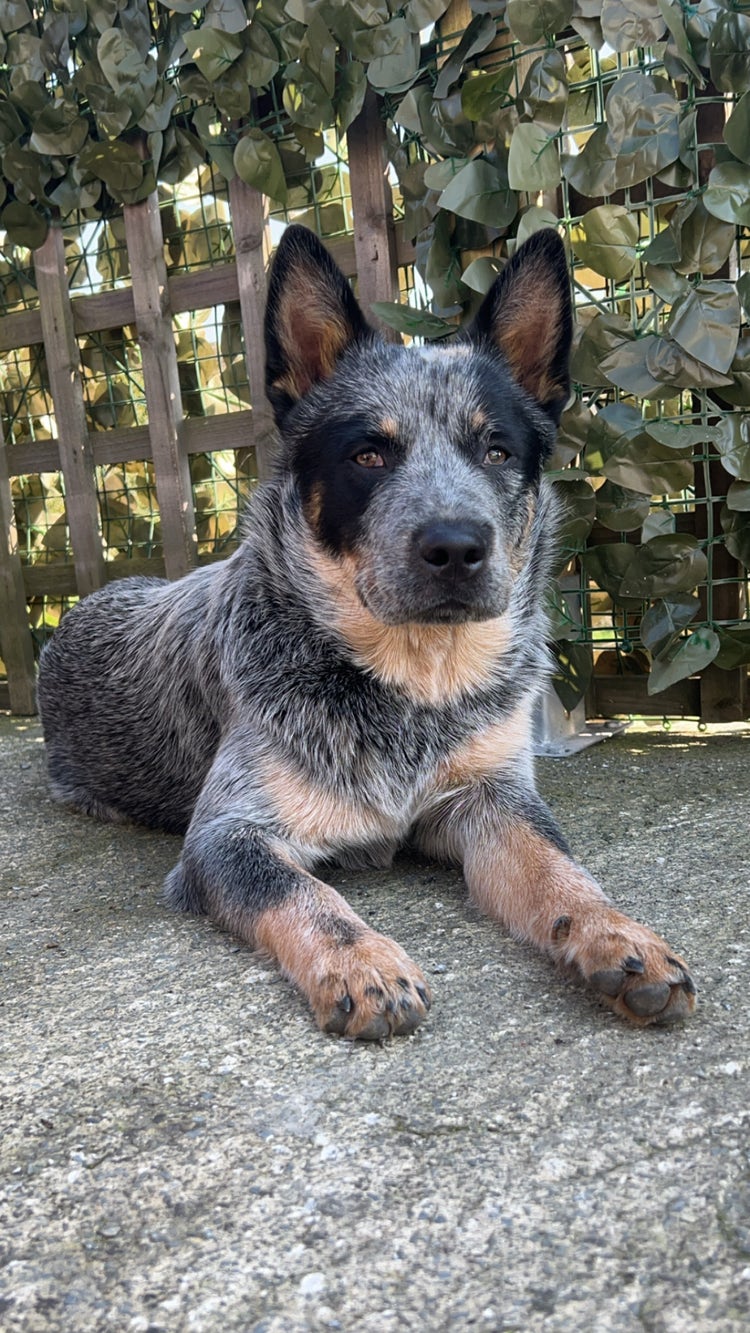
A young dog from Aberystwyth has been given a brand‑new lease of life thanks to cutting‑edge orthopaedic implant technology now being used at CVS’ Bristol Vet Specialists - with surgeons calling it one of the most advanced joint‑repair techniques available in veterinary medicine today.
Ozzy, a lively Australian Cattle Dog who was only 1‑year‑7‑month‑old, had been struggling for months with worsening lameness after his owner, Ms Cerys Williams, noticed he was limping and sitting awkwardly on his right hind leg.
Despite rest and pain relief, the problem continued. So, he was referred by his local vets, to Bristol Vet Specialists animal hospital, after his condition failed to improve.
When Ozzy arrived, he was severely lame and clearly uncomfortable. His hocks were hyperextended, he avoided putting weight on his right hind limb, and both his tarsi were swollen and painful. A CT scan revealed the cause: bilateral osteochondritis dissecans of the tarsus - a painful joint condition that, without intervention, could leave him with lifelong arthritis and progressive disability.
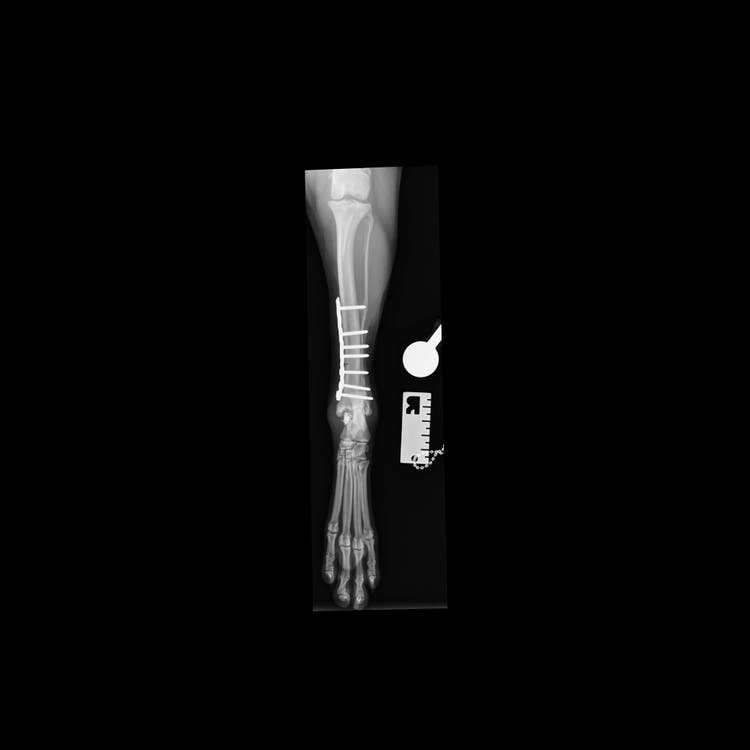
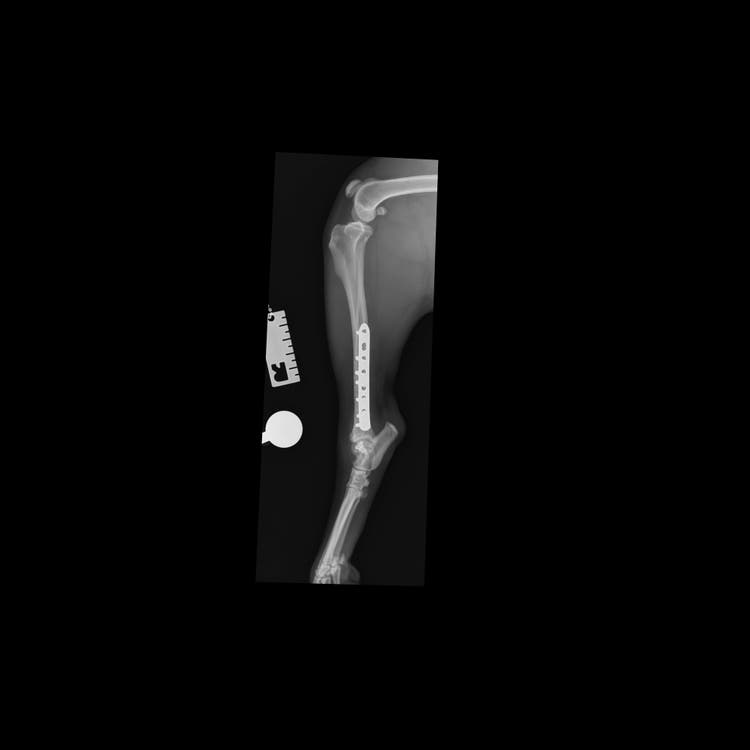
Instead of facing restricted mobility or major salvage surgery, Ozzy became one of the first dogs in the UK to receive a pioneering custom‑made ‘joint resurfacing implant’ - designed specifically for his own joint anatomy.
His cutting‑edge implant combines ultra‑strong titanium with a high‑tech thermoplastic polyurethane surface - a clever springy material that behaves just like real cartilage – to create a “bionic joint” so advanced it could come straight out of a sci‑fi movie. The implants were created in collaboration with animalTECH, a specialist orthopaedic manufacturer in Germany. Using Ozzy’s CT scan, animalTECH designed the bespoke implant, custom surgical guides and even 3D‑printed bone models, allowing the surgical team to rehearse the entire procedure before stepping into theatre.
The two hour operation was led by Dan Ogden, Specialist Orthopaedic Surgeon and Head of Surgery at Bristol Vet Specialists. To access the damaged joint surface, surgeons temporarily removed a section of Ozzy’s tibia, preserving the surrounding ligaments. Using the tailor‑made guides, they precisely reamed out the defective cartilage and underlying bone before seating the implant in place. The tibia was then repaired using screws and a locking plate. The precision of the implant design meant the resurfaced joint could match Ozzy’s natural anatomy, helping preserve joint stability and movement.
Dan Ogden, Specialist Orthopaedic Surgeon at Bristol Vet Specialists, said:
Ozzy’s recovery involved eight weeks of strict rest, followed by a gradual return to exercise. His improvement has been striking. He is now off all pain medication, far more comfortable, and his owner Cerys reports only the occasional brief skipping step.
Cerys said: