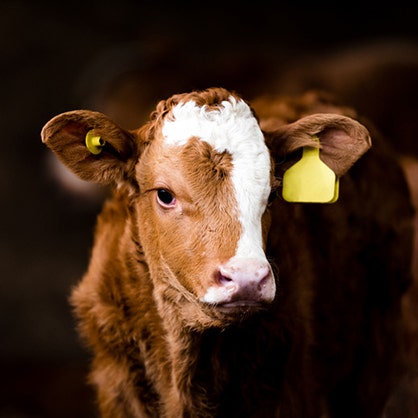
CVS Farm has reported significant progress in its ongoing calf respiratory disease project, launched in 2022 to improve the detection, prevention and management of Bovine Respiratory Disease (BRD) across UK cattle farms.
The latest 2025 data shows a major increase in diagnostic testing, deeper engagement in preventive herd health planning, and widespread adoption of evidence‑based protocols designed to reduce disease burden and antimicrobial use.
BRD remains one of the most costly and persistent health challenges affecting youngstock, with an estimated annual industry impact of £50 million. As a complex disease driven by viral, bacterial and mycoplasma pathogens, effective control requires early detection, accurate pathogen identification and proactive, farm‑specific prevention strategies.
CVS Farm’s three‑year project, supported by Boehringer Ingelheim, was established to remove barriers to diagnostic testing and embed diagnostic‑led herd health planning across its farm network.
Throughout 2025, CVS Farm practices continued to offer subsidised nasopharyngeal swabs and multiplex PCR testing, processed through CVS Labs using an eight‑pathogen panel. This approach has enabled vets to identify the exact pathogens circulating within individual herds and tailor their recommendations accordingly.
Diagnostic submissions almost doubled in 2025, increasing from 124 in 2023 and 125 in 2024 to 247 this year. The number of processed samples rose to 190, reflecting strengthened collaboration between farmers and their veterinary teams and the growing normalisation of diagnostic testing as part of routine herd health planning.
said Steven Carragher, CVS Farm Quality Improvement Director.
The expanded dataset from 2023–2025 has highlighted consistent patterns in the pathogens associated with BRD cases:
- Pasteurella (94%), Mannheimia (64%) and Histophilus (48%) remained the most prevalent bacterial findings.
- Viral components included coronavirus (34%), RSV (28%) and PI3 (10%).
- IBR prevalence remained notably low at just 6%.
These insights have helped veterinary teams design farm‑specific plans that incorporate ventilation improvements, hygiene and biosecurity measures, colostrum management, vaccination strategies and more precise antimicrobial protocols. Crucially, vaccination timing has emerged as a key determinant of success, with strategies increasingly aligned to predictable stress periods such as weaning and housing.
The simplicity of the swabbing procedure has also encouraged greater participation from recently qualified vets, providing a practical entry point to lead diagnostic investigations and develop confidence in herd health conversations. Whilst CVS Farm Quality Improvement Leads across its 15 farm practices have supported case discussions and ensured consistent delivery of the project’s aims.
With diagnostic‑led prevention now firmly embedded, CVS Farm plans to publish the full dataset and findings in the coming months, sharing insights with the wider farming community and contributing to the industry’s collective understanding of BRD control.
CVS Farm veterinary division has over 120 vets in 15 modern farm and poultry specific practices nationwide. Its practices offer a comprehensive range of services, with a focus on helping its clients prevent disease and maximise efficiency of production on their farms. CVS Farm’s collective knowledge, clinical skills and buying power enables it to assist its clients with the most cost-effective solutions to all their animal medicine requirements.