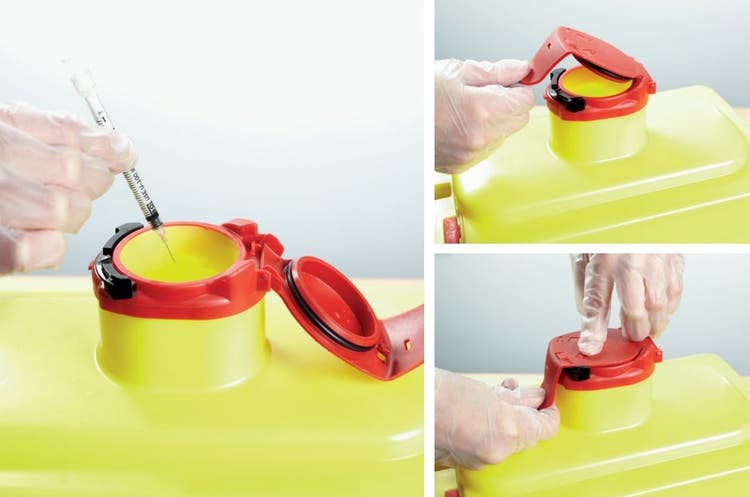
Move will save 21,000 single use bins and 30 tonnes of CO2 a year
CVS has introduced new reuseable sharps bins across all of its practices UK-wide.
Each reusable sharps bin can be reused up to 200 times. The move is expected to save 21,000 single-use sharps bins from being incinerated per annum across all CVS sites, resulting in the direct reduction of approximately 30 tonnes of CO2 emissions every year.
Sharps bins are currently used in all of CVS practices, MiNightVet out-of-hours vets, and specialist referrals hospitals. To date, these standard sharps bins have been single use and have undergone high temperature incineration, as used sharps, such as needles, need to be treated with great care.
CVS’ new reuseable sharps bins will be filled at practice and collected by CVS’ waste collection services. They will be emptied using specialist robotic equipment, then carefully sanitised and inspected before being reassembled. Finally, they will be returned to practice for re-use.
Three sizes of sharps bins have been introduced, at 7.5L, 15.1L and 30.1L. They are made from recyclable plastic, and similar in shape and form to original sharps bins but with a temporary locking top which snaps shut when full.
The migration to reuseable sharps bins comes after a successful pilot scheme was conducted in Chestergates Veterinary Specialists hospital.
CVS has set stretching targets to significantly reduce the company’s environmental impact, with the aim of becoming a more sustainable company. The group has committed to reducing waste sent to landfill by 10.0% and increasing the % of non-medical waste recycled to 38.0% by July 2025. During 2023-2024 CVS achieved a 13.9% reduction in medical waste and a 34.7% reduction in medical waste incinerated[i]. CVS progress and targets are outlined in the company’s 2024 Sustainability Report here[ii].
CVS Group operates across small animal, farm animal, equine and laboratories, with over 500 veterinary practices and referral centres in the UK and Australia. In the last five years the company has invested nearly £80 million in its sites, facilities and equipment, in addition to industry leading training and support, to give the best possible care to animals.
[i] More accurate reporting methods have been implemented in the year
[ii] page 10 to 26