Nurses to take central role in evolving lameness clinical improvement project
CVS has launched a new osteoarthritis training programme for its companion animal nurses, to enable them to take a lead in managing this common condition in patients in first opinion practice.
The training is part of a CVS clinical improvement project focusing on lameness, which has evolved over the last year to focus on this degenerative joint disease. It is appropriate for client-facing consulting nurses and those who want to take on more responsibility.
Osteoarthritis is a common problem in small animals. It is estimated that up to 40% of dogs aged 8 months–4 years have osteoarthritis[1] and 90% of cats over 12 years have radiographic signs of degenerative joint disease[2]. Genetics, developmental disorders of bones or joints and injuries such as a cruciate ligament rupture can initiate or trigger the disease. Its pathogenesis involves a degradation of cartilage and subsequent joint remodelling, along with active inflammatory cells and mediators in the surrounding tissues. The incurable condition needs to be managed to the best extent with an individualised patient care plan.
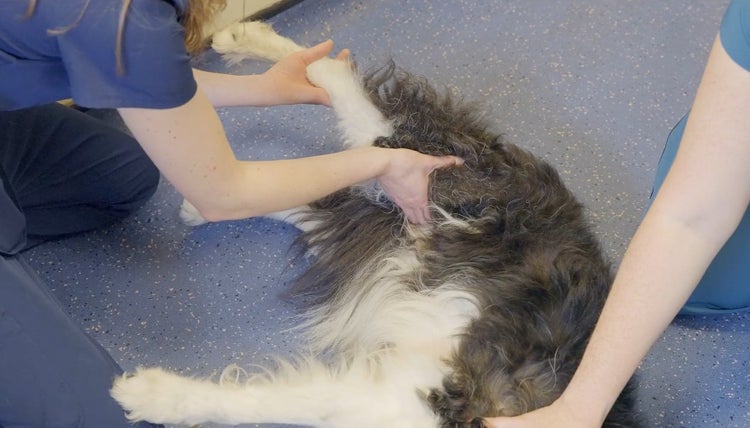
The CVS Osteoarthritis Nurse Training Programme aims to achieve a big behavioural change in practice. Held over the course of one day, CVS Nurses are taught how to conduct a canine and feline mobility clinics to identify the clinical signs of osteoarthritis, and how to offer clients subsequent support to manage the condition as per the veterinary surgeons’ advice.
Nurses are trained on how to effectively use the Liverpool Osteoarthritis in Dogs (LOAD) questionnaire[3] - a 13-item clinical metrology instrument (CMI) used to assess articular disorders - which includes questions on the pets’ medical background, lifestyle and mobility. Here, individual question scores are summed to provide an overall “LOAD score” suggestive of the animal’s disease presence and severity, with the questionnaire repeated and results tracked over time.
The CVS nurse training programme also tutors colleagues on a range of potential management options to be considered with owners to determine the best course of action. Individual training sections are run on:
In addition, the training session also includes the practical aspects of setting up and conducting mobility clinics, to empower CVS nurses to undertake this client facing role whilst working under the delegation of a vet.
[1] Enomoto M, de Castro N, Hash J, et al. Prevalence of radiographic appendicular osteoarthritis and associated clinical signs in young dogs. Sci Rep. 2024;14(1):2827. doi:10.1038/s41598-024-52324-9
[2] Lascelles BDX, Henry JB III, Brown J, et al. Cross-sectional study of the prevalence of radiographic degenerative joint disease in domesticated cats. Vet Surg. 2010;39(5):535-44. doi:10.1111/j.1532-950X.2010.00708.x
[3] Developed by John Innes at the University of Liverpool New tool to help diagnose canine arthritis - News - University of Liverpool