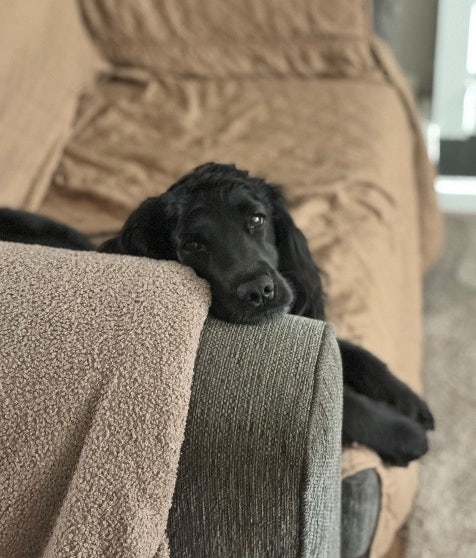
A local family dog has narrowly escaped a life‑threatening situation after specialists at CVS‑owned Chestergates Veterinary Specialists discovered that her liver had slipped into her chest cavity, crushing her lungs and putting her life in danger.
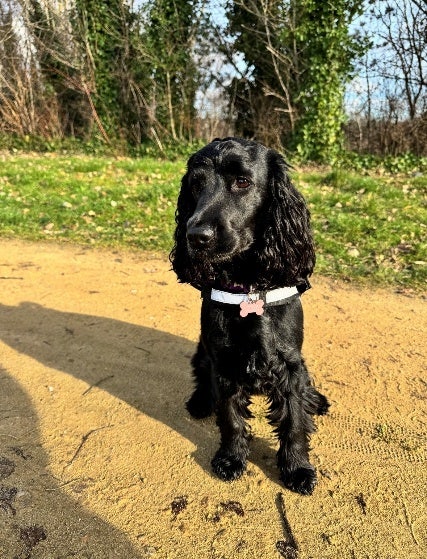
Willow, previously a fit and healthy dog, first alarmed her owner Beth Dunne early this summer when she developed a nasal discharge and mild breathing difficulty. Concerned, they took her straight to their local vet, where tests began.
But as Willow’s symptoms escalated and fluid appeared in her chest, she needed several emergency out‑of‑hours visits. A CT scan was arranged - and the results were shocking.
The scan revealed a diaphragmatic hernia, a tear in the muscle separating the chest and abdomen. Part of Willow’s liver had herniated up into her chest, with signs that one of the liver lobes may have twisted - a condition that can quickly become life‑threatening. The internal findings were extremely serious, prompting an urgent referral for specialist veterinary surgery.
Her case was taken on by Erika Bianchini, EBVS® European Specialist in Small Animal Surgery. Erika confirmed that the CT scan showed a significant diaphragmatic defect, with displaced liver tissue and concerns about lobe torsion. Surgery was the only option.
Willow underwent two hours of intricate specialist surgery at Chestergates, overseen by a team of surgeons, anaesthetists and nurses. The team carefully returned the herniated liver to the abdominal cavity, removed the damaged twisted lobe and repaired the tear in the diaphragm.
After two days of specialist nursing care at Chestergates Willow recovered exceptionally well. She was able to return home just two days later. A few weeks on, Willow is back to her normal playful and bouncy self.
Erika said:
Diaphragmatic hernias in dogs are rare. Symptoms vary widely - from sudden breathing difficulty and shock in acute cases to subtle signs such as lethargy or weight loss in chronic ones. Some long‑standing hernias are discovered entirely by chance during imaging for unrelated issues. Chestergates encourages owners to seek immediate veterinary assessment if their dog shows unexplained breathing problems, collapse, lethargy or recurrent chest fluid - as conditions like Willow’s often require advanced imaging and a specialist surgical team.
Chestergates Veterinary Specialists, based in Chester, has a 21-year history. With state-of-the-art facilities and employing some of Europe’s leading veterinary specialists, Chestergates offers a wide range of specialist-led services including orthopaedics, cardiology, soft tissue surgery, anaesthesia and analgesia, ophthalmology, internal medicine, diagnostic imaging and neurology and neurosurgery. For more information visit Chestergates.