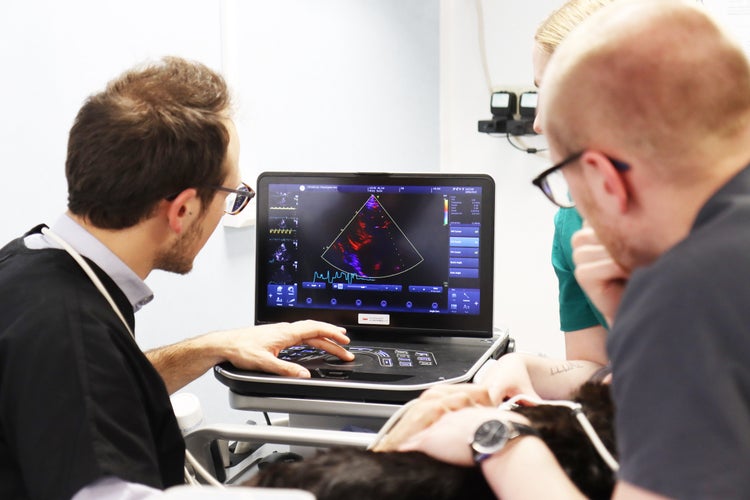
Cardiac disease is common in small animals, affecting 10% of dogs and 15% of cats during their lifetime[i]. Smaller dog breeds are most likely to have myxomatous mitral valve disease, while larger breeds are more prone to dilated cardiomyopathy[ii]. The most common cardiac condition diagnosed in cats is hypertrophic cardiomyopathy.
Veterinary cardiology diagnosis and treatment has progressed significantly in the last decade. There has been considerable advancement in affordable diagnostic equipment, the staging of certain diseases, drugs and treatments, and case management within first opinion practices.
Echocardiography, the use of ultrasound to examine the heart, is a key tool to diagnose and stage cardiac disease. Work ups using echocardiography can enable the clinician to look both inside and around the heart, to get an idea of how it is functioning in real time.
The CVS clinical improvement project initially looked at how effective CVS small animal first opinion practices were at conducting echocardiography. It found that a key barrier was a lack of up-to-date equipment, along with a lack of current knowledge and training - both in using ultrasound and echocardiography equipment and in interpreting images. As a result, many colleagues were routinely referring suspected cardiac disease cases.
The CVS cardiac ultrasound project leads then reviewed and recommended practice equipment, so that clinicians had the tools to perform echocardiograms in practice. This included the acquisition of echocardiography tables - so that practitioners could scan an animal’s chest from underneath, more advanced cardiac ultrasound machines and electrocardiogram (ECG) machines.
A suite of resources was produced for practice vets and nurses to help them to improve echocardiography scan rates, and nurse cardiology clinics. These included; clinical guidelines, machine guides and client resources.
To upskill and develop colleagues, dedicated vet and nurse training sessions were held. Three vet training days focused on new advancements in heart disease diagnosis and treatment, including how to perform echocardiography, held by CVS’ cardiologist specialists. Two nurse CPD days taught colleagues how to conduct nurse cardiology clinics to support pet owners, and how to perform and interpret electrocardiography, blood pressure checks and thoracic point of care ultrasound (POCUS).
Learning lunches and webinars were also hosted regularly, and a certificate holder ‘buddy’ system is currently being set up. In addition, a cardiology online workspace has been created on CVS’ Knowledge Hub platform, hosting training materials and a discussion forum, where colleagues can collaborate and share experiences.
[i] Keene, B. W., Atkins, C. E., Bonagura, J. D., Fox, P. R., Häggström, J., Fuentes, V. L., Oyama, M. A., Rush, J. E., Stepien, R., & Uechi, M. (2019). ACVIM consensus guidelines for the diagnosis and treatment of myxomatous mitral valve disease in dogs. Journal of Veterinary Internal Medicine, 33(3), 1127–1140.
[ii] Payne, J. R., Brodbelt, D. C., & Luis Fuentes, V. (2015). Cardiomyopathy prevalence in 780 apparently healthy cats in rehoming centres (the CatScan study). Journal of Veterinary Cardiology: the official journal of the European Society of Veterinary Cardiology, 17 Suppl 1, S244–S257.