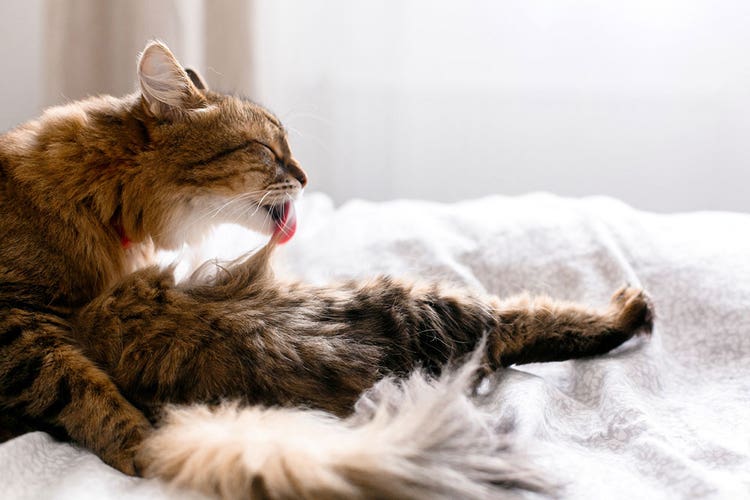
CVS veterinary group is encouraging veterinary professionals to help promote a major international research project investigating grooming behaviour in cats, which could help improve feline health and wellbeing for years to come.
We all know that most cats like to keep their coats clean and shiny and, in the process, may swallow hair that forms clumps (hairballs) that they later vomit or pass. However, despite hairballs often being considered a normal part of feline behaviour, there is still surprisingly little scientific evidence about how common they are, what causes them and when they may be a sign of a wider health issue.
Led by globally recognised feline medicine specialist Dr Sam Taylor FRCVS at CVS Vets, The Fur Report will gather information from cat caregivers around the world to better understand grooming behaviour and explore how factors such as coat length and owner care practices, including brushing and bathing, may influence hairball frequency and feline health.
Veterinary practices are being encouraged to share details of the study with cat owners aged 18 and over and invite them to complete a short online survey, regardless of whether their cat experiences hairballs or not.
Dr Sam Taylor said:
The project brings together world-leading feline medicine experts and the CVS Research team, combining specialist clinical knowledge with advanced research methods to answer practical questions that matter to both pet owners and veterinary professionals.
The findings are expected to help shape future advice on coat care and the prevention of problems associated with hairballs, ultimately supporting better feline welfare and evidence-based clinical guidance across the veterinary profession.
By encouraging clients to spend just a few minutes completing the survey (and completing the survey themselves if cat owners), veterinary professionals can play a direct role in advancing feline healthcare and helping researchers build a clearer picture of what keeps cats healthy and thriving.
To take part in The Fur Report survey, visit: www.surveymonkey.com/r/The_Fur_Report .